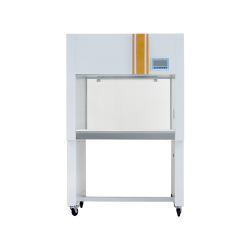
IcemakerFactory offers a wide variety of laboratory equipment that satisfy the diverse needs of scientific research, experiments, and analysis. Our lab equipment comprises different types of apparatus, instruments, and tools that are designed to enable accurate measurements, precise observations, and controlled conditions. We are committed to delivering high-quality, reliable, and innovative laboratory solutions that adhere to international standards. Each product is thoughtfully engineered to enhance efficiency, ensure user safety, and support the evolving challenges of modern scientific and industrial laboratories.
A Biological Safety Cabinet (BSC) is a critical piece of laboratory equipment designed to protect laboratory personnel, the environment, and the products being worked on from exposure to hazardous biological agents. BSCs achieve this by using high-efficiency particulate air (HEPA) filtration systems and controlled airflow patterns.
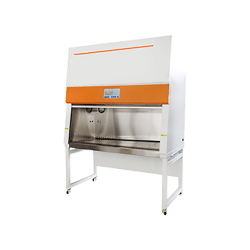
Number Of Colonies: ≤0.5pcs/dish hour (Φ90mm culture plate)
Average Wind Speed: 0.38 ± 0.025 m/s, 0.26 ± 0.025m/s, 0.27 ± 0.025m/s
Front Suction Wind Speed: 0.55m ± 0.025m/s (30% Efflux)

Number Of Colonies: ≤0.5pcs/dish hour (Φ90mm culture plate)
Average Wind Speed: 0.38 ± 0.025 m/s, 0.26 ± 0.025m/s, 0.27 ± 0.025m/s
Front Suction Wind Speed: 0.55m ± 0.025m/s (30% Efflux)
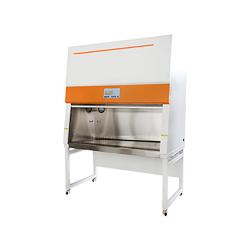
Number Of Colonies: ≤0.5pcs/dish hour (Φ90mm culture plate)
Average Wind Speed: 0.38 ± 0.025 m/s, 0.26 ± 0.025m/s, 0.27 ± 0.025m/s
Front Suction Wind Speed: 0.55m ± 0.025m/s (30% Efflux)

The Average Wind Speed- Inner Side: 0.38 + -0.025m/s
The Average Wind Speed- Middle: 0.26 + -0.025 m/S
The Average Wind Speed-Inside: 0.35 + -0.025 m/s
Blotting equipment is used in molecular biology and biochemistry laboratories to transfer biomolecules (typically proteins or nucleic acids) from a gel onto a membrane for detection and analysis. The process involves separating the molecules via gel electrophoresis and then transferring them to a nitrocellulose or PVDF membrane through capillary action, vacuum, or electric current (electroblotting).
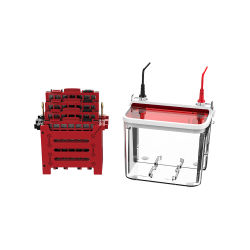
Platinum Electrode: φ0.25mm
Quantity: 1 to 4 piece(s)
cooling Units: 2 units
Transfer Size: 110×90mm

Transfer Plates : 2
cooling Units: 2
Quantity: 1-2 piece(s)
Transfer Size: 110×90 mm

Temperature Range: 5 to 40 ˚C
Relative Moisture: 20 to 80%
Blot Area: 15.5ⅹ11ⅹ2 cm
Blot Speed: 2 mini gels within 3 minutes, 4 mini gels or 2 midi gels within 7 minutes
Electrophoresis is a laboratory technique used to separate DNA, RNA, or proteins based on their size and electrical charge. Electrophoresis equipment consists of several components designed to perform this separation in a controlled and precise environment.
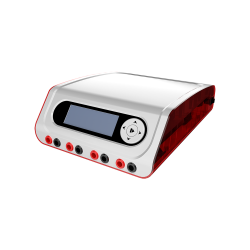

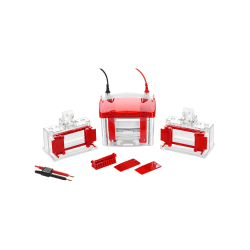

The Horizontal Laminar Flow Cabinet is a specialized laboratory workstation designed to provide a sterile environment by directing filtered air in a horizontal, unidirectional flow across the work surface. This setup effectively minimizes particulate contamination, making it ideal for applications requiring a clean and controlled atmosphere.
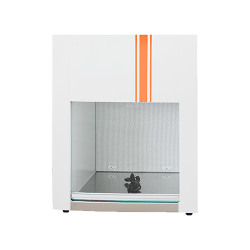
Cleanliness Level: Class 100 @ ≥ 0.5μM
Number Of Colonies: ≤0.5pcs/dish hour (Φ90mm culture plate)
Average Wind Speed: 0.25 to 0.45 m/s (Fast and slow)
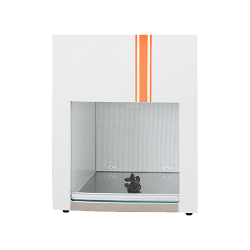
Cleanliness Level: Class 100 @ ≥ 0.5μM
Number Of Colonies: ≤0.5pcs/dish hour (Φ90mm culture plate)
Average Wind Speed: 0.25 to 0.45 m/s (Fast and slow)
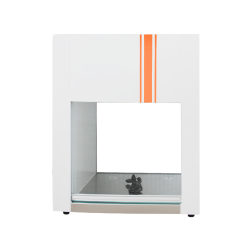
Cleanliness Level: Class 100@≥0.5μM
Number Of Colonies: ≤0.5pcs/dish hour (Φ90mm culture plate)
Average Wind Speed: 0.25 to 0.45m/s (Fast and slow)
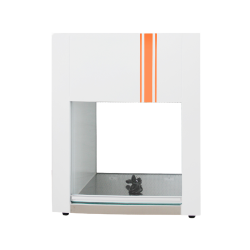
Cleanliness Level: Class 100@≥0.5μM
Number Of Colonies: ≤0.5pcs/dish hour (Φ90mm culture plate)
Average Wind Speed: 0.25 to 0.45m/s (Fast and slow)